
Top 10 Organic Food Companies – 2023
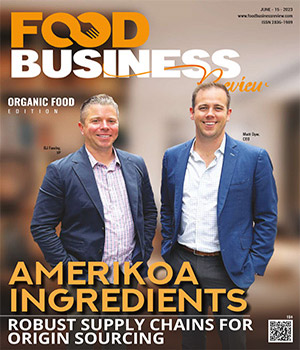
Organic Food - 2023
Nominate a Company
Usually, the qualified subscribers of our magazine nominate companies with whom they have collaborated and experienced exceptional results to be in this list. Did a company you recently worked with give you stellar results and ROI? Did it turn out to be one you would wholeheartedly recommend to peers? Or do you know of such an outstanding company through your network? Please fill in the details below and nominate them to be featured here.

Top 10 Organic Food Companies
Amerikoa Ingredients offers a set of robust supply chain solutions designed for origin sourcing. As opposed to an importer buying the product at origin and selling it through a distributor, Amerikoa imports and sells the most authentic organic ingredients directly to customers and adapting it to how and where they need it. ... read full profile
ATX Specialty Foods
ATX offers diverse retail branded, food service, and private label products. With an experienced staff and a view to the future, they are dedicated to continuously developing highquality, tasty culinary items from outstanding ingredients
Big Green Organic Foods
They are merchants of great organic, gluten-free grains, pastas, flour, herbs, and berries at Big Green Organic Foods. They hope that all of this work will result in the availability of organic and natural foods for well-being and health. Big Green Organic Food is dedicated to maintaining the brand’s organic origin and integrity because they think that true healthy organic food should include three or fewer components; all organic goods are typically created with a single ingredient
Eggland’s Best
With decades of sales growth, Eggland’s Best is America’s #1 egg, built for families that want to eat healthy while enjoying the delicious flavor of farm-fresh eggs. They give the chicks a healthful, all-vegetarian diet with no animal fats or byproducts, additional hormones, or antibiotics. Their diet comprises nutritious grains, canola oil, and a nutritious supplement of rice bran, kelp, alfalfa powder, and Vitamin E. Their USDA Organic brown eggs are available in large, extra large, and jumbo sizes and provide excellent nutrients
Farmer Focus
The goal at Farmer Focus is on future generations; from ensuring financial viability for future generations of farmers to reducing our carbon footprint and decreasing our water consumption, they strive for a more fair and sustainable future for all. Organic is the cornerstone of treating animals worldwide and users, so they are always Organic, from the high-quality grain they feed their flocks to the delectable spices
Germinal Organic
Germinal Organic believes that quality originates at the source. They use only organically grown, GMO-free products to create delicious meals. It has been creating delectable gluten-free, organic cuisine inspired by nature for over 30 years to help customers snack healthy. They are happy to be able to provide customers with a selection of organic, vegan, and gluten-free bars, crackers, and cookies
International Harvest
International Harvest has become a significant provider and environmental steward of the world’s finest organic superfoods and snacks. They understand that the foods they eat tremendously influence health, culture, environment, and local and global economy. That is why they only buy the highest-quality products from worldwide, forming connections with farmers and manufacturers to promote environmental sustainability and wellness for everybody
Juicekeys
Juicekeys is a family-run juice bar that is locally owned and operated. They specialize in delicious smoothies, power bowls, cold-pressed juice, and healthy cuisine. They are motivated by high-quality cuisine that positively influences the body and mind, resulting in a beautiful experience. They concerted to get the finest quality raw materials and processing processes, preferring natural, local, organic, non-GMO, and delectable foods
Reliable Products
They take pleasure in delivering the best quality Non-GMO and Certified Organic seeds, grains, nuts, and other gluten-free food components at Reliable Products. They always aim to meet and surpass the consumers’ demands while keeping them current on the most recent market situations
Woodstock Farms Manufacturing
Woodstock Farms Manufacturing creates unique, healthier private-label food brands and bulk cases for top-tier retailers and manufacturers. To increase their market share, they use high-quality organic and natural nuts, dried fruit, trail mix, seeds, and grains that capitalize on current consumer trends. They handle all aspects of brand creation for users, including sourcing in the United States and worldwide, manufacturing, roasting, blending, seasoning, graphic design, and developing flexible packaging options
Organic Food Info
Q1
What Do Organic and Plant-Based Food Companies Do?
Top Organic and Plant-Based Food Companies develop, manufacture and market foods built around organic sourcing, plant-derived ingredients, clean labels and shifting dietary preferences. The category spans finished consumer products, bakery, dairy alternatives, snacks, proteins and specialty ingredients. For decision-makers, the landscape is less about a single diet trend and more about trust: ingredient transparency, certification discipline, taste, nutrition, safety, shelf stability and credible brand positioning in a crowded natural-food market. Strong companies also show they can balance consumer appeal with supply consistency.
Q2
Why Do Top Organic and Plant-Based Food Companies Matter Now?
Top Organic and Plant-Based Food Companies matter now because organic and plant-based foods sit at the intersection of health, sustainability, label scrutiny and convenience. U.S. certified organic product sales reached $71.6 billion in 2024, while global plant-based food retail sales grew to $28.6 billion, giving the category both mainstream scale and innovation pressure. For retailers, foodservice teams and consumers, the priority is no longer novelty alone. The stronger proposition is food that tastes good, earns trust and fits daily purchasing habits.
Q3
How Should Readers Evaluate Organic Food Companies?
Evaluation should begin with ingredient credibility, certification status, sourcing standards and how clearly a company explains what it removes or avoids. Readers comparing organic food vendors should also assess product quality, allergen management, nutritional profile, pricing, packaging and channel fit. Organic food companies that can support clean-label claims with reliable production, transparent supply chains and consistent product experience tend to stand out. In consumer-facing categories, taste and texture matter as much as health positioning because repeat purchase depends on pleasure, not just principle.
Q4
What Value Do Leading Companies Create for Consumers and Retailers?
Top Organic and Plant-Based Food Companies create value by translating food preferences into practical products that can live in normal shopping baskets, menus and family routines. The impact can be nutritional, environmental, emotional and commercial: better ingredient awareness, wider choice for restricted diets, more credible sustainability narratives and differentiated shelf presence. For business readers, the best companies connect product development with supply discipline, brand trust and retailer readiness. For consumers, value often shows up as simpler labels, accessible formats and confidence in what they are eating.
Q5
What Role Does Innovation Play in the Category?
Innovation matters when it improves taste, nutrition, safety, affordability or convenience rather than simply adding a claim to the package. In plant-based food companies, innovation may involve better proteins, fermentation, allergen-free formulas or texture systems that make alternatives feel familiar. In organic product lines, it may appear through low-sugar formats, cleaner preservation, minimally processed ingredients and packaging that protects freshness. The strongest clean-label food brands treat technology as a support for credibility, not a substitute for quality, transparency or responsible sourcing.
Q6
Which Companies Illustrate the Listing Context?
The Food Business Review listing shows Bianco Gelato, Inked Bread Co. and NURA among the first visible examples. Bianco Gelato is positioned around clean-label gelato, Inked Bread Co. around organic and low-carb bread and NURA around vegan protein ingredients. Together, they show why Top Organic and Plant-Based Food Companies cannot be evaluated by one product type alone. Readers should look for category focus, ingredient integrity, credible claims, repeatable quality and a clear answer to why the product deserves space in a changing food market.
